I am thrilled to have written an essay about Wilhemina Barns-Graham for Tate, to be included in the book to accompany their forthcoming retrospective exhibition of her work at Tate St Ives.
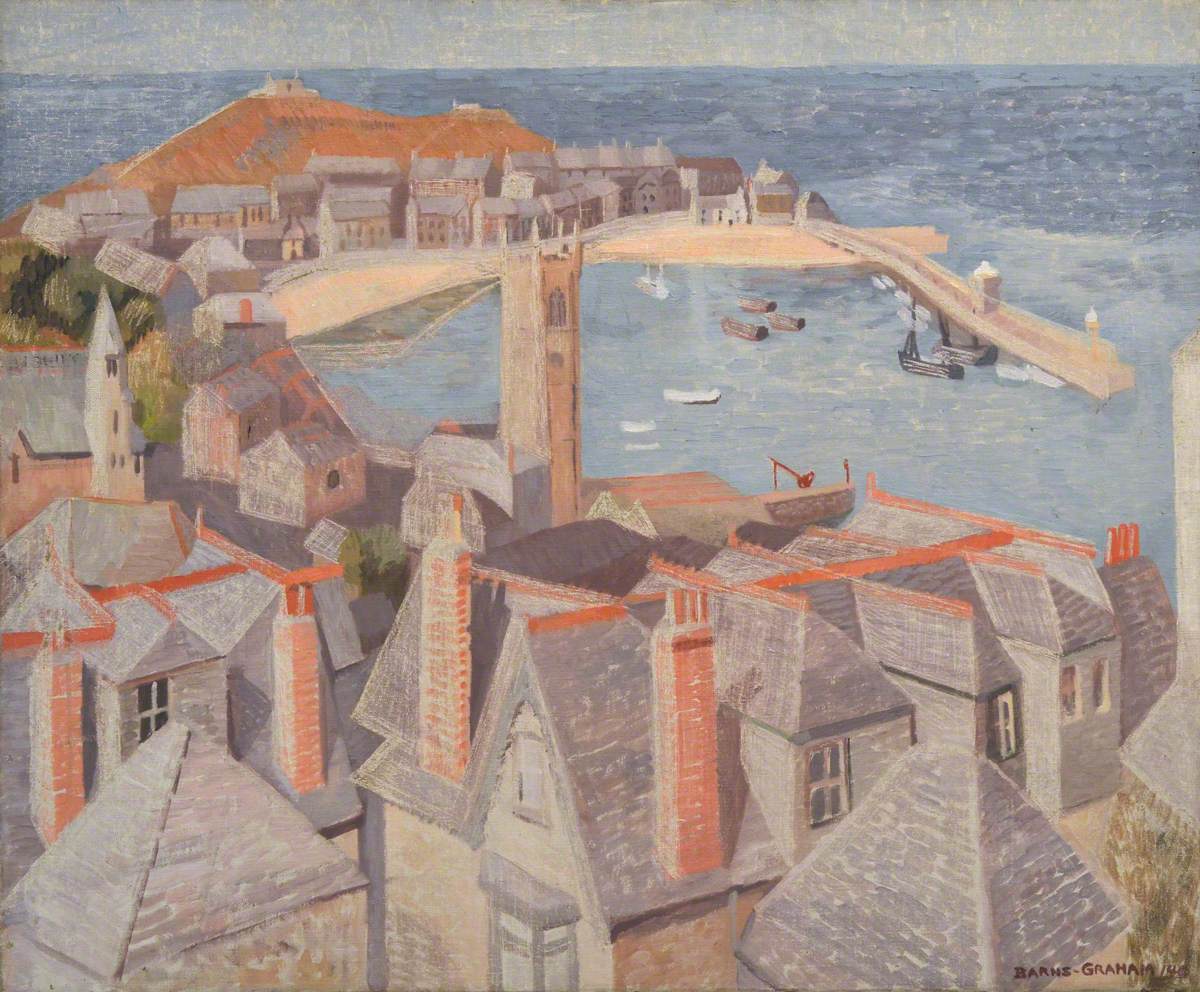
oil on canvas, 63 x 75cm
Collection and (c) The Wilhelmina Barns-Graham Trust
Edinburgh in the 1930s and St Ives in the 1940s
I have written about Barns-Graham’s time in Edinburgh during the 1930s. She trained at Edinburgh College of Art on and off throughout the decade at a time with the Scottish capital’s art scene was tremendously vibrant. In 1940 she moved to St Ives in Cornwall, where she was to become a central figure in what is now known as the ‘St Ives School’. Barns-Graham is now recognised as a pioneer of British abstraction.
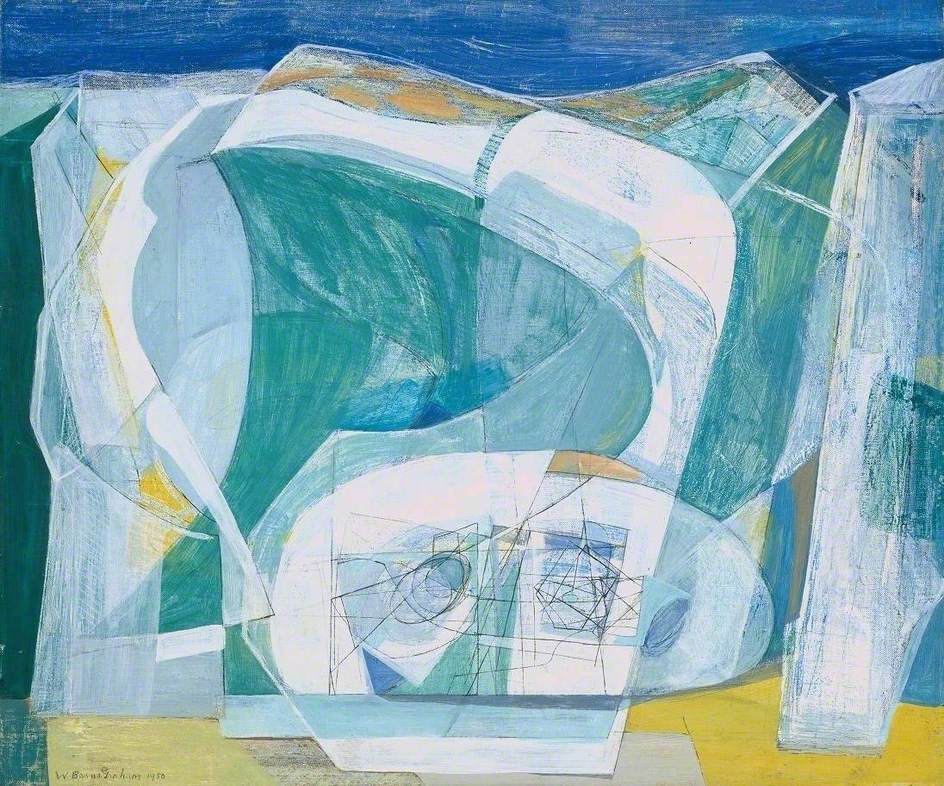
oil on canvas, 51 x 61cm
Tate: Presented by the Contemporary Art Society 1964 (c) Wilhelmina Barns-Graham Trust
Wilhelmina Barns-Graham at Tate St Ives
The forthcoming exhibition at Tate St Ives covers Barns-Graham’s eight-decades-long career. It will consist of over 170 works ‘shaped by landscape, sensation and abstraction’, which reveal her as ‘one of the most innovative figures in British modernism and a key member of St Ives’s mid-century artistic community’. The Tate’s Glacier Crystal, Grindelwald (above) will be a key inclusion. It comes from a breakthrough series which followed a trip to Switzerland in 1949, which was the subject of a recent book to which I also contributed. The new book will be published to co-incide with the opening of the exhibition on 24 October 2026.
For more about Wilhelmina Barns-Graham you might like this post. To find out about Barns-Graham and Barbara Hepworth, follow this link. If you’re interested in other books I have written, you might like this feature.
